Thirty thousand people, a thousand,or a hundred.
The hard part of running a community changes shape as it grows. At a hundred people you can hold it in your head. At a thousand you cannot, and you find out too late. At thirty thousand across thirty buildings, the question stops being who is slipping and becomes which campus, and who over there already knows.
Below are three written scenarios, one at each size. Each shows what breaks at that size, what they would run on The Cross, and which parts of it they would actually use.
Written examples, not customers
- 01The multisite church30 locations, 30,000 members. Runs on Dedicated App.
- 02The ministry1,000 members, no building. Runs on Branded.
- 03The Bible study group100 members, one living room. Runs on Groups.
The sizes are here to show what changes as a community grows. They are not a claim about who uses The Cross.
Read this first
These are written examples, not customers.
The three communities below do not exist. No quote, no logo, no result, and no member count on this page describes anything that has happened on The Cross. We have not put a church's name on a story it did not tell.
The sizes, 30 locations and 30,000 members, then 1,000, then 100, are here to show what changes as a community gets bigger. They are not a claim about who uses The Cross.
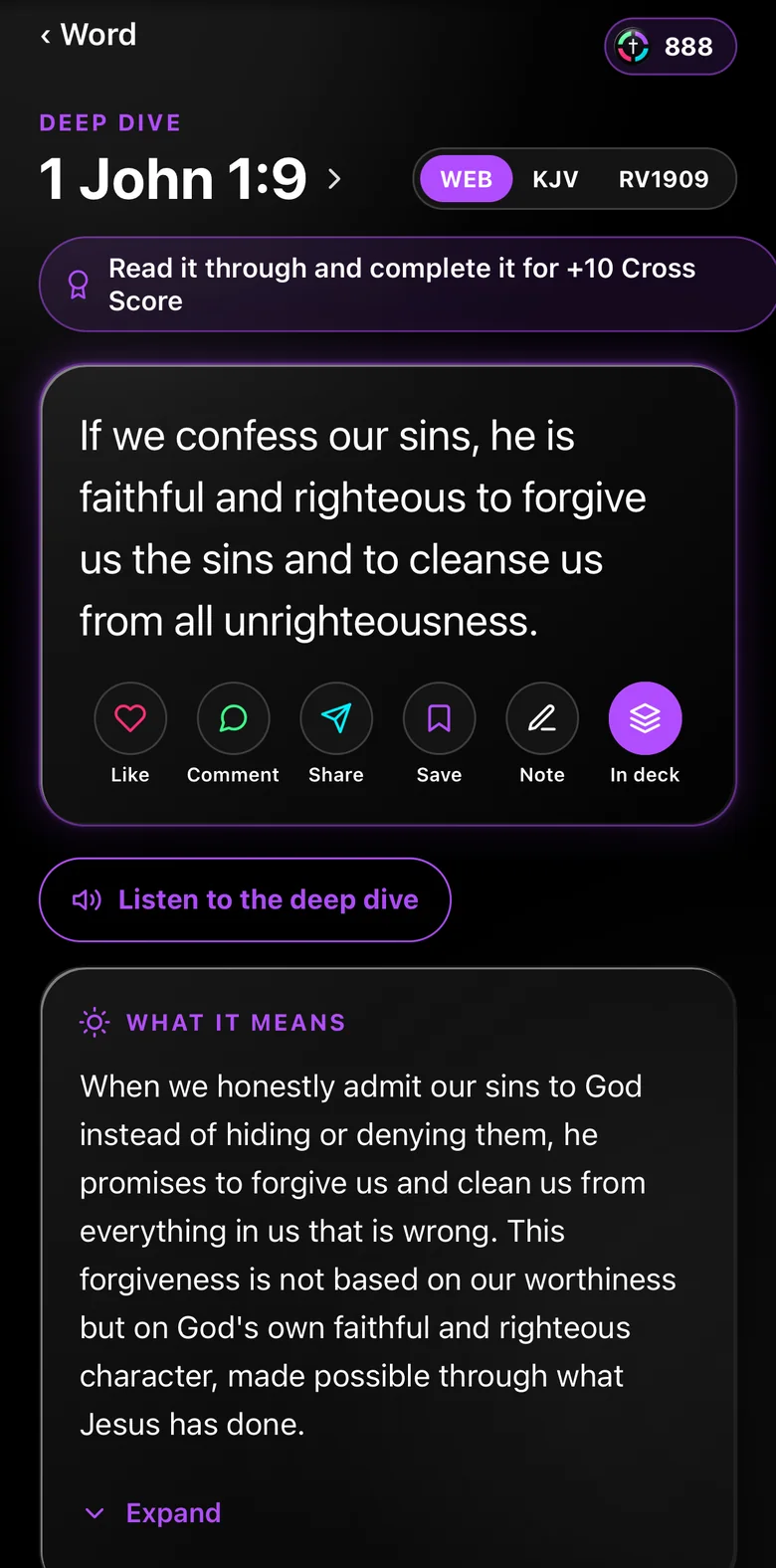
The phones are real captures of the app. Every panel that shows a leader's screen is drawn and labelled as drawn. None has a figure in it, because we will not show you a console we have not captured.
The multisite church.
Illustrative. No church of this size runs on The Cross today. The church is written, and the leader screens are drawn.
Who they are
One church, one teaching, thirty buildings. A central team of half a dozen people carries the strategy, a campus pastor carries each location, and several hundred volunteer group leaders carry the actual people. Sunday works. Sunday has always worked. It is the other six days nobody can see.
What breaks at this size
At 30,000 people, discipleship gets measured by attendance, because attendance is the only thing anyone counts. Nobody at the central office can answer how campus fourteen is doing without emailing campus fourteen and waiting a week for a number somebody estimated.
Communication is thirty separate group texts, thirty email lists, and thirty social accounts, so one message arrives in thirty different voices, or does not arrive. Announcements land. Care does not.
And when a member finally asks who has read the things they wrote down, the honest answer is that nobody knows, because nothing recorded it.
What they run on The Cross.
One home for all thirty campuses. Every campus is its own room with its own roster and its own leaders, and every campus adds up into one view. The central team sees the whole church. The campus pastor sees their campus. The volunteer leader sees their table.
Drawn, not real data
The whole church
Came back on their own
The one number the product optimizes
Daily and weekly active
And how sticky that is
Closing all four accounts
The share of members
The neglected account
Which of the four everyone is skipping
Drawn, not real data
One message, aimed
Audience
- Everyone
- One challenge
- One campus
Drawn, not real data
The audit trail
This log cannot be edited, and it cannot be switched off.
And their own app, under their own name.
At this size a church is not going to send 30,000 people to download something with somebody else's name on it. On the Dedicated App tier, the listing in the Apple App Store and Google Play is theirs. So are the domain and the push notifications, and The Cross is never named anywhere a member can see it. We build it, we submit it, and we handle the updates.
There is no screenshot of a store listing on this page, because no app has been submitted for a church like this. What white labelling looks like today is on the product page: the same app, running under two different community brands.
What the leader actually sees
The executive pastor opens one page and knows, before the Monday meeting, what share of 30,000 people came back on their own last week and whether that moved. They can see which account the whole church is neglecting, and which campuses are carrying the average up.
The campus pastor at location fourteen opens the same product and sees location fourteen: their roster, their leaders, their tables, their people who have gone quiet. They do not need permission from the central office to make the call, and they do not have to wait for a report.
At this size, somebody eventually asks whether staff read what a member wrote. When they do, there is a log with an answer in it instead of a promise.
To be exact about what the panels above prove: they are the shape of the screens, not a console with thirty campuses in it. The per campus split described here comes from how the product structures churches and organizations. There is no capture of it at this scale, because no community this size is on The Cross.
The ministry.
Illustrative. This ministry is written, not a customer. The phone is real, and the leader screens are drawn.
Who they are
A ministry rather than a church. There is no room they all walk into on Sunday. Their thousand people came from a podcast, a conference, a book, and a lot of word of mouth, and they are spread across a dozen states. The teaching is genuinely theirs, the voice is theirs, and the brand is most of what they have.
Right now that thousand people is an email list, a paid community on somebody else's platform, and a spreadsheet.
What breaks at this size
An email list is a broadcast, not a community. People receive it and nothing is asked of them, so the ones who need it most quietly stop opening it and nobody notices for a year.
A group on a social platform is somebody else's property, somebody else's algorithm, and somebody else's branding wrapped around your teaching. You cannot export it, and it can be taken away.
And at a thousand people the leader loses the thing that worked at a hundred: knowing by feel who is struggling. At a hundred you notice. At a thousand you find out afterward.
What they run on The Cross.
Their brand on everything and their own subdomain, so a member never sees any brand but theirs. Their own content rhythm, written by them, day by day. A group structure underneath, so a thousand people are actually a hundred and something small rooms. And leaders who can see who is thriving and who is slipping while there is still time to call.
Drawn, not real data
Their content rhythm, day by day
Day and title
Which of the four accounts it leans on
Scripture reference
The teaching, in your words
The morning ask
The evening examen
Drawn, not real data
Who is thriving and who is slipping
- Open crisis alerts nobody has closedOpen the alert queue
- A theme climbing fastDraft a broadcast
- Words getting darker, or going quietFlag their table leaders
- Prayers answeredShare it
A thousand people is a hundred small rooms.
Nobody belongs to a thousand people. They belong to the six or eight whose names they know. Underneath the ministry brand sit the tables, each with a leader, a running chat, a prayer board, and a shared streak that breaks when somebody disappears.
That is the layer that makes a broadcast into a community. The ministry writes the day. The table is where the day gets carried.
Drawn, not real data
A table
- A leaderOne person who knows their name
- A running chatKept between meetings
- A prayer boardStays until it is answered
- A shared streakBreaks when somebody disappears
Their brand, all the way down.
On the Branded tier their logo, their two colors, their language, and their subdomain go on, and The Cross is invisible to their members. The console their leaders sign into carries their name in the corner too, not ours.
What that looks like today is on the product page: two real communities, each running the same app under their own name, their own mark and their own colours.
What the leader actually sees
The ministry lead opens The Pulse on a Tuesday and reads the week. How many people wrote something, and how many of those voices skew struggling. Which theme is climbing, and which account the whole community is neglecting right now.
Underneath it is a list of what to do about it, and each item has a button. Open crisis alerts nobody has answered, so open the alert queue. A theme climbing fast, so draft a broadcast on it. People whose words are getting darker, so flag their table leaders while a single named check in still turns it around.
That is the difference between a thousand subscribers and a thousand members. One is a number that goes up. The other is a room you can walk into.
The Bible study group.
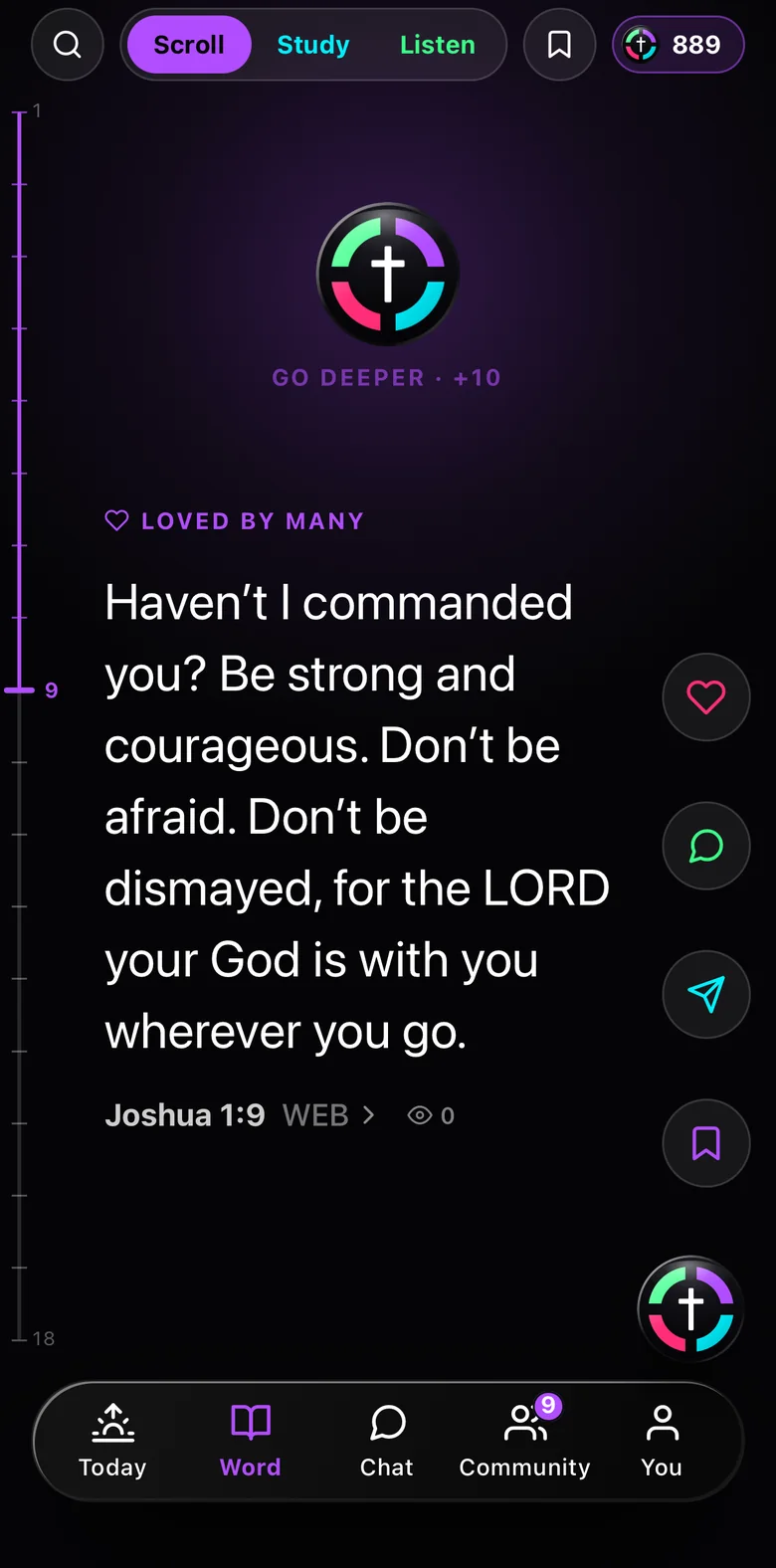
Illustrative. This group is written, not a customer. The phones are real, and the start screens are drawn.
Who they are
One person who is not on staff anywhere. It started with eight people in a living room on a Tuesday. Then somebody brought their neighbor, then their coworker. Now a hundred names are attached to it across four houses and a church basement, and it is still one person holding the whole thing.
They have no budget, no designer, no developer, and no interest in becoming an administrator. They have a Tuesday.
What breaks at this size
A hundred people is exactly where a group text stops working. Nobody can tell who read anything. Somebody new cannot catch up on what they missed. And the person who was quiet for three weeks looks identical to the person who was busy.
Six days out of seven, nothing happens. Whatever Tuesday built is gone by Thursday, and the honest ones say so.
And the leader carries every name in their head. That works for about a season, and then they quietly burn out and the group ends.
What they run on The Cross.
The Groups tier, started from a phone, in about the time it takes to name the thing. The group gets its own feed, its own tables, and its own studies, with the daily walk and the written challenges already inside it. It needs no card and no setup call, and you install nothing.
Drawn, not real data
Name it and you are running
Group name
Who it is for (optional)
Drawn, not real data
How the other ninety nine get in
Join with a code
The boxes are empty on purpose. No code is shown here.
Everything between the meetings.
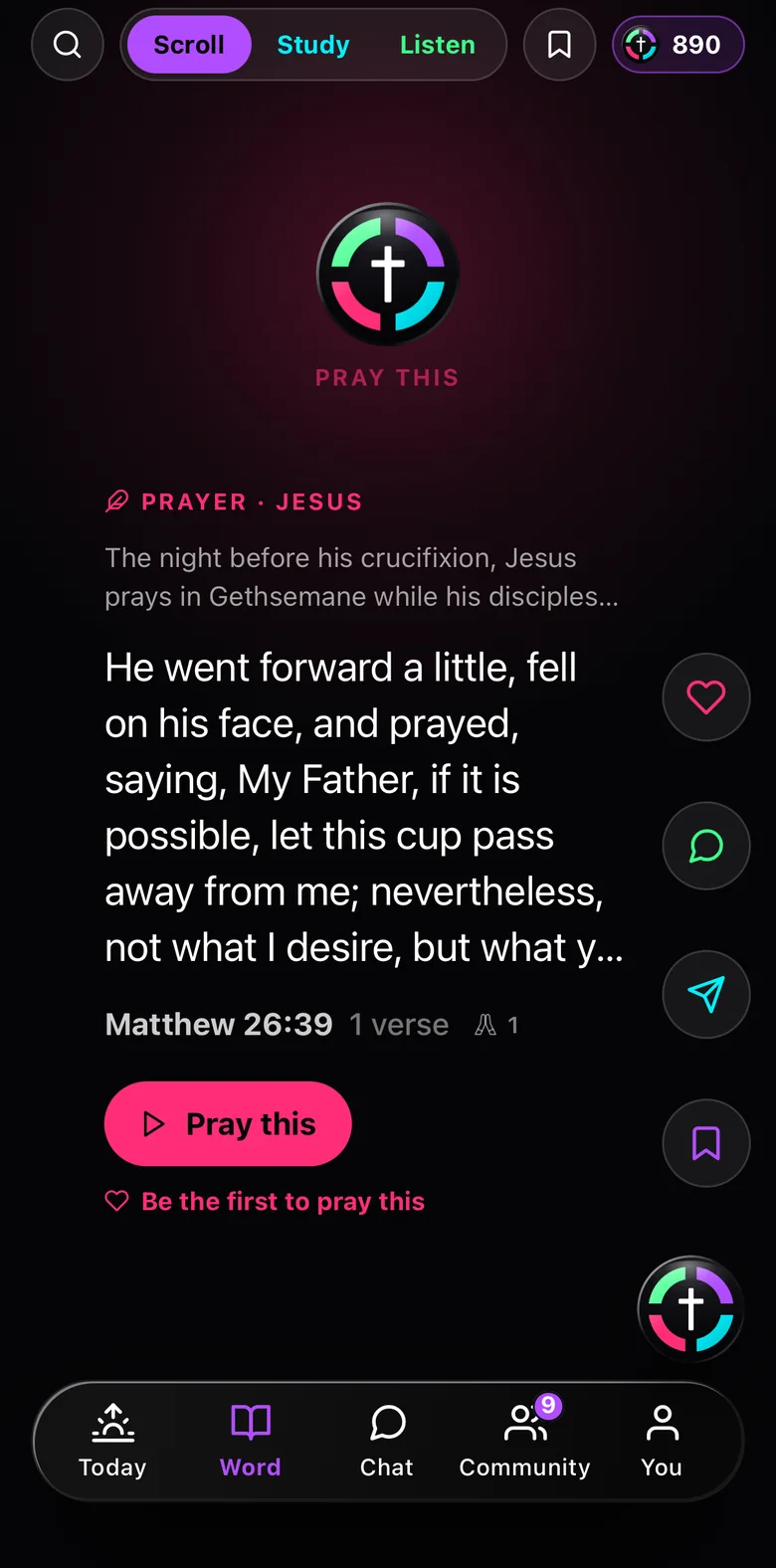
This is the whole reason a group of this size needs anything at all. The study is fine. The week is the problem. Between Tuesday and Tuesday, each person has a daily reading and a daily practice. There is a table chat that is not buried in a phone's messages app. And there is a prayer board where somebody says the thing they were not going to say out loud in a living room.
A prayer stays on the board until it is answered, and then it stays there answered. That is the part people come back for.
What the leader actually sees
Not a dashboard they have to learn. They open the app they already have and see who showed up, who has gone quiet, and what people are carrying this week. That is the whole job at this size, and it is the job the group text could never do.
The living room leader is not trying to run an organization. They are trying to not lose anybody. What The Cross gives them is the second Tuesday of somebody's bad month, noticed on the Thursday.
If it grows past this, nothing has to be rebuilt. The same community moves up a tier and puts a name and a logo around what is already running, with the same people and the same history inside it.
What the Groups tier does not do.
The group is branded inside the app, not around it. Members download The Cross app and see The Cross name outside the room. There is no subdomain and no store listing at this tier. If the leader wants their own name on the outside, that is the Branded tier and a conversation.
Three sizes, one app.
The scenarios above are different because the problems are different. The product underneath them is not three products.
The same console
The living room leader and the executive pastor sign into the same leader console. The difference between them is how much of it is filled in and whose name is on the corner.
The same member app
Four rings, a table, a prayer board, a journal, and a month board. A member who moves between communities is not learning a new product.
The same isolation
One community can never see another community's people or anything they wrote. The database enforces that, not just the screens, at 100 members and at 30,000.
The same log
Every staff read of member content is recorded with a reason, in a log that can only be added to. It cannot be edited or switched off. Included even on Groups.
The real screens the member opens are on the product page, with what each one is doing written under it.
Find the one that is your size.
If it is the living room, start today and stop reading. If it is bigger than that, tell us what you are running and we will tell you what it takes.